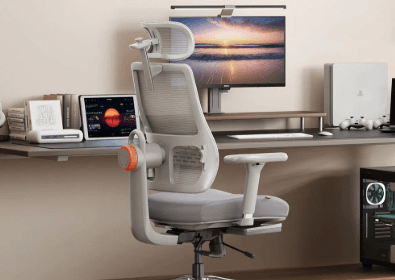
Sitting positions have changed dramatically in recent decades and current furniture design is not optimised for these new postures. The shift in ways of living brought about by increased remote working, raised screen usage and an ageing population all wanting to remain in their own homes for longer, puts greater pressures on furniture to support the human body.
The hidden cost of poor seating choices
You may not even realise you have a problem with your chair until it’s too late. However, poor posture can keep you awake at night due to lower back pain, headaches and a sore stiff neck, or cause you to feel tired due to poor circulation.
At first it may seem a small thing but if you spend a lot of time sitting then a mediocre chair can soon become a major problem. Whether it is a long day at work or watching the telly in the evenings there comes a point when you start to notice the stresses and creaks of an inferior chair. Is it time to upgrade to something better?
For a long time, office chairs have received attention for their ergonomic design, which has been shown to decrease musculoskeletal complaints in the workspace by 40-60%. However, given that more and more people spend time in front of the TV or computer at home, the same principles could be applied here.
Remote work reshaped priorities completely
Seating provided for use at home is often intended for occasional use and not for long term occupation. While a kitchen chair or sofa may be sufficiently comfortable for short term occupancy for, say, an hour or so for occasional guests, it is most certainly not suitable as a basis for office seating.
But equally as important, people who might not normally consider a lumbar support or seat depth were converted into customers with needs that regular home furniture does not satisfy.
Demographic changes drive practical innovation
With Australia’s population ageing, the humble seat is evolving to meet new demands. What was once suitable for children or young adults is no longer sufficient for older generations. Seating designed for seniors over 60 requires additional features to help them sit and stand safely from a seated position due to mobility, joint or balance related issues.
While this demographic may not be interested in purchasing institutional-style assistive furniture for their residences, designers and manufacturers are responding to their needs and developing solutions with functional assistance features and contemporary design aesthetic. A recliner with lift assistance is a prevalent product configuration, available in numerous fabrics and styles to match any décor in the home.
Furniture has evolved and now serves not only to furnish your home, but also to support your independence and comfort.
The science behind supportive seating
Our ergonomic seating solutions have been developed on a solid foundation of research into the human biomechanics associated with sitting. Ergonomic seating designed for a healthy back, maintains the natural S-shape of the spine, evenly distributes weight and allows for numerous position changes while sitting throughout the day.
Chair ergonomics can be as simple as having the seat height correct to allow your feet to be flat on the floor, sufficient lumbar support to allow your lower back to be in its most natural shape and your armrests at the correct height to prevent you from leaning forward and adding tension to your shoulders. But ergonomics is not confined to our chairs at work.
After a while static chairs become uncomfortable. Optimal seating encourages some gentle micro-movements.
See also: AI in Crisis Prediction
Investment value of quality ergonomic furniture
Good ergonomic seating tends to cost more initially, but can be cost effective long term.
Ergonomic furniture is made to last and is built with high quality products that will provide up to 10-15 years life span if used correctly and maintained properly. It is hard to put a monetary value on many of the health benefits provided by using ergonomic furniture ie back pain alleviation & prevention, but there most certainly are some economic benefits to the individual and company. By using good ergonomic furniture, you can prevent or alleviate countless physio sessions, lost days at work & most importantly good quality sleep and high productivity levels.
Your everyday comfort, immediate and lasting, is significantly improved. Large changes may not occur overnight, but the removal of even the smallest and most annoying discomforts can add up to make big changes.
Choosing ergonomic seating for your lifestyle
Most ergonomic chairs are designed with the posture of the user in mind, but this is often between sitting and standing positions, and does not necessarily take into account the requirements for chairs used for specific activities as opposed to rest. When considering options like recliner chairs, it’s important to evaluate your individual needs.
We tried to consider all the ways you might use your furniture, and any particular requirements you might have. Unfortunately, it is not always possible to place order on the basis of a site visit and ‘test drive’ the furniture before purchasing. Furniture can feel fine in the showroom during a 10 minute seat test but uncomfortable after an hour or so of use.
Seating that supports the human body is one of the most practical purchases you can make. Comfort is no longer a luxury at home but a necessity that supports health, productivity and independence.