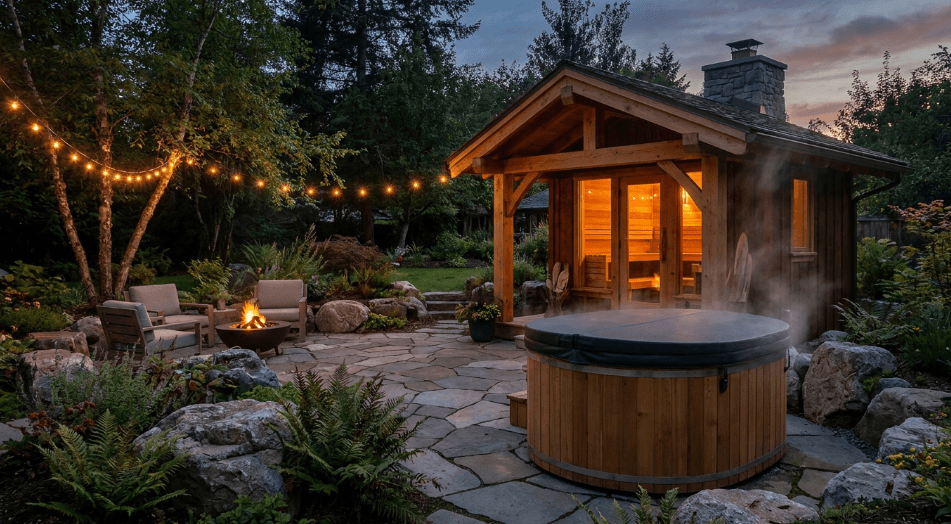
A sauna bought for daily use needs different specs than one used occasionally: a heater rated for continuous duty rather than intermittent weekend use, kiln-dried wood that can handle constant heat and humidity cycling, and a realistic monthly electrical cost worked out before purchase rather than discovered on the first bill. Skipping these checks is how buyers end up replacing a heater element within two years or living with a cabin that never quite smells right after six months of daily sessions.
Step 1: Confirm the Heater Is Rated for Continuous Duty
Heaters sold for home saunas are not all built the same, even at similar wattage. Some are designed around occasional weekend use, a session or two a week, and their element life is rated accordingly. A heater intended for daily use should list a continuous duty rating, and its element should be stainless steel or a comparable high-grade alloy with a stated life in the 5,000 to 10,000 hour range. Ask directly whether a model is rated for daily residential use before ordering. A heater that runs nonstop under daily demand without that rating tends to need element replacement within two to three years instead of the five-plus years a properly rated unit should deliver.
Step 2: Size the Heater to Cubic Footage, Not Just Session Frequency
Heater capacity should match the room’s cubic footage regardless of how often it runs, but daily use raises the cost of getting sizing wrong. An undersized heater running every day works harder to reach temperature and never fully rests between cycles, which shortens its working life faster than the same undersizing would in a sauna used twice a week. A commonly used starting point for a well-insulated cabin is roughly one kilowatt per 45 to 60 cubic feet of interior volume, adjusted upward for high ceilings or large glass panels. A reputable maker will ask about ceiling height and window area before recommending a model rather than selling off floor space alone.
Step 3: Choose Wood That Can Handle Daily Heat and Humidity Cycling
Wood species matters more for a daily-use cabin than for one used occasionally, because constant expansion and contraction from repeated heating and cooling is what eventually causes warping or checking in lower-quality lumber. Western red cedar and Nordic spruce are the standard choices because both resist warping and release minimal resin under repeated heat cycles. Heat-treated hemlock performs reasonably well as a lower-cost option, but only when it has been properly kiln-dried, since improperly dried boards are far more likely to crack under daily thermal stress. Tongue-and-groove joinery with no exposed metal fasteners on the interior also matters more under daily use, since gaps between poorly fitted boards widen faster with constant cycling and start leaking heat within a year or two.
Step 4: Work Out the Real Monthly Operating Cost Before Buying
A heater drawing 4.5 to 8 kilowatts, running through a 45 to 60 minute warm-up plus session time, adds up to real money over 30 days. At common household electricity rates, daily use typically lands somewhere around $30 to $70 a month depending on heater size, local rates, and how well the cabin holds heat once it reaches temperature. This is worth calculating before ordering rather than after, since it is the single biggest ongoing cost difference between an efficient, well-insulated unit and a leaky one that runs longer to hit the same temperature. Comparing listed kilowatt ratings and interior cubic footage side by side across retailers, including SweatDecks saunas, gives a clearer read on expected running cost than sticker price alone.
Step 5: Decide Between Infrared and Traditional Heat for an Everyday Routine
The choice between infrared and traditional heat matters more for a daily user than an occasional one, since warm-up time and per-session cost multiply across a week. Infrared cabins reach usable temperature in under fifteen minutes and generally cost less to run per session, which fits neatly into a daily routine on a weekday morning or evening. Traditional saunas take longer to heat, often 30 to 45 minutes, and draw more power to reach 150 to 195 degrees, but deliver the steam option and more intense heat that some daily users specifically want. Neither is the correct default choice, the right one depends on whether the daily habit is about a quick reset or a longer, more deliberate session. Some buyers planning daily use split the difference with a hybrid cabin that combines infrared panels and a small traditional heater, giving flexibility for a fast weekday session and a longer weekend one in the same footprint, though hybrid units generally cost more upfront than a single-mode cabin of comparable size.
What the Evidence Says About Frequent Sauna Use
Buyers planning daily use often ask whether the research actually supports that frequency, and the honest answer is that most of the strongest data comes from Finnish cohorts using a sauna four to seven times a week, which is closer to daily than occasional. A review in The American Journal of Medicine summarized associations between regular sauna bathing and cardiovascular markers while also noting real contraindications for people with unstable heart conditions. A physiology-focused review on the effects of heat and cold, with particular attention to Finnish sauna bathing, described dose-related patterns tied to frequency. A 2023 review in Mayo Clinic Proceedings looked at sauna bathing combined with other lifestyle habits and found the combination tracked with stronger associations than sauna use in isolation. These are population-level associations, not proof for any individual, and anyone with a cardiovascular condition planning daily use should treat this as a reason to ask specific questions of a physician rather than a guarantee.
Frequently Asked Questions
What sauna heater lasts longest under daily use? Look for continuous residential duty rating with stainless steel elements and a stated life of 5,000 to 10,000 hours. Weekend-rated heaters run daily often need element replacement within two to three years.
How much does it cost to run a sauna every day? A 4.5 to 8 kilowatt heater running 1.5 to 2 hours daily typically adds around $30 to $70 a month, depending on local electricity rates and heater size.
Does daily sauna use wear out the wood faster? Yes, daily cycling ages wood faster than occasional use, which is why kiln-dried cedar or spruce and an annual light sanding of bench surfaces matter more for daily users.
Is infrared or traditional heat better for everyday sessions? Infrared heats faster and costs less per session, suiting a daily routine. Traditional saunas take longer but deliver steam and more intense heat some daily users prefer.
References
- Benefits and risks of sauna bathing, The American Journal of Medicine, 2001
- Does the Combination of Finnish Sauna Bathing and Other Lifestyle Factors Confer Additional Health Benefits? A Review of the Evidence, Mayo Clinic Proceedings, 2023
- Effects of heat and cold on health, with special reference to Finnish sauna bathing, American Journal of Physiology, 2018